Direct answer
The Income-tax Act, 2025 (in force from 1 April 2026) renumbered almost every section. For individuals the ones that come up most are: 80C → 123, 80D → 126, 87A → 156, 115BAC → 202 (new regime), 54 / 54EC / 54F → 82 / 85 / 86 and 112A → 198. Use the new numbers for income from April 2026, and the old ones for FY 2025-26 and earlier.
I've kept this list deliberately short. These are the sections my salaried and investor clients actually ask about, and I checked each row against the CBDT correspondence table and the Act as amended by the Finance Act, 2026. For anything not listed, use the official utility linked below rather than a blog table, including this one.
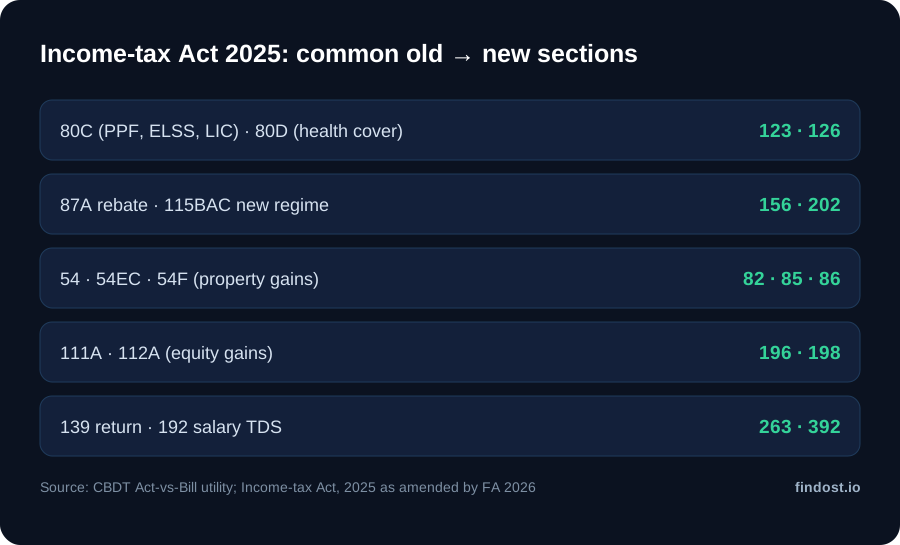
Old → new section numbers for individuals
| What it covers | 1961 Act | 2025 Act |
|---|---|---|
| Standard deduction (salary) | 16(ia) | 19 |
| Interest on home loan (let-out / self-occupied) | 24(b) | 22 |
| PPF, ELSS, life insurance, tuition fees, principal repaid | 80C | 123 + Schedule XV |
| NPS contributions | 80CCD | 124 |
| Health insurance premium | 80D | 126 |
| Donations | 80G | 133 |
| Rebate for resident individuals | 87A | 156 |
| Capital gains charge | 45 | 67 |
| Sell a house, buy a house | 54 | 82 |
| Capital gains bonds (REC, PFC and others) | 54EC | 85 |
| Sell any long-term asset, buy a house | 54F | 86 |
| Short-term gains on listed equity / equity funds | 111A | 196 |
| Long-term gains (general) | 112 | 197 |
| Long-term gains on listed equity / equity funds | 112A | 198 |
| New (default) tax regime for individuals | 115BAC | 202 |
| Filing the return | 139 | 263 |
| Late filing fee | 234F | 428 |
| TDS on salary | 192 | 392 |
Sources: CBDT utility: Income-tax Act vis-à-vis Bill; Income-tax Act, 2025 as amended by Finance Act, 2026; CBDT transition FAQs. Checked 17 October 2026.
What renumbering does and doesn't change
- Doesn't change: the core idea of most deductions. Section 123 still lists the familiar 80C items, and it still only helps if you opt for the old regime.
- Can change: limits and rates, which the Finance Act sets each year. The 2026 amendments, for example, narrowed the tax-free treatment of Sovereign Gold Bond redemption (see the SGB redemption tax guide).
- Changes the paperwork: TDS returns for transactions from 1 April 2026 must quote the new sections (section 393 for most non-salary TDS), according to the CBDT FAQs.
Illustration: reading a 2026-27 investment proof request
Illustration: your HR portal asks for “Section 123 declarations” for Tax Year 2026-27. That's what you used to call 80C: PPF deposits, ELSS, life insurance premium and so on. The “Section 126” line is your health insurance premium, formerly 80D. If you've chosen the default new regime (section 202), most of these deductions won't reduce your tax; compare both regimes with the old vs new regime calculator before you submit.
New to the tax-year idea? Start with tax year vs assessment year.