Tax year (2025 Act)

Tax year vs assessment year: what changed under the Income-tax Act, 2025

By Pratik Bajoria — Chartered Accountant, NISM-certified Research Analyst & Mutual Fund Distributor. Reviewed by Findost desk (CA-led). Published 2026-10-17.

Findost (findost.io) and PaisaGuru by Findost are not affiliated with Findoc, FinDost, or other similarly named brands. PaisaGuru is the AI wealth concierge of Findost.

Direct answer

From 1 April 2026 the Income-tax Act, 2025 uses a single tax year: the April-to-March year in which you earn the income. It replaces the old pair of “previous year” and “assessment year”. So AY 2026-27 and Tax Year 2026-27 are different years of income: AY 2026-27 is income earned April 2025 to March 2026 (old Act, return filed in 2026); Tax Year 2026-27 is income earned April 2026 to March 2027 (new Act, return filed in 2027).

Since April, the question I get most from salaried clients isn't about rates. It's “my CA says AY 2026-27, the news says tax year 2026-27, are these the same thing?” They aren't, and mixing them up is how people end up quoting the wrong section in a reply to a notice.
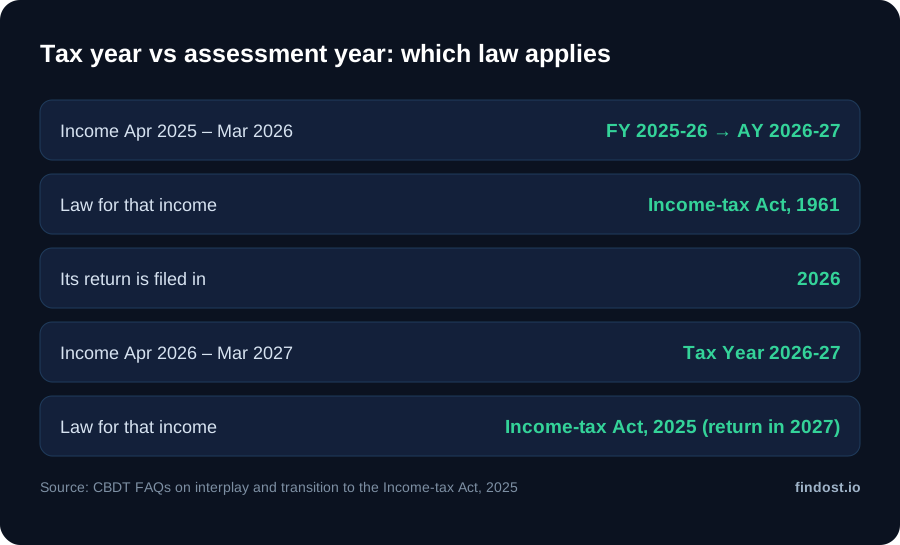
Timeline: income from April 2025 to March 2026 is FY 2025-26, assessed in AY 2026-27 under the Income-tax Act 1961 with the return filed in 2026; income from April 2026 to March 2027 is Tax Year 2026-27 under the Income-tax Act 2025 with the return filed in 2027.
Which law applies to which income. Source: CBDT transition FAQs.

The two years side by side

FY/AY under the 1961 Act vs tax year under the 2025 Act
Income-tax Act, 1961Income-tax Act, 2025
Year you earn incomePrevious year (financial year)Tax year
Year it is assessedAssessment year (the next year)Same tax year (no separate AY)
Income Apr 2025 – Mar 2026FY 2025-26 / AY 2026-27—
Income Apr 2026 – Mar 2027—Tax Year 2026-27
When that return is filed20262027
Section numbers to quote80C, 80D, 87A …123, 126, 156 …

Source: CBDT FAQs on interplay and transition from the Income-tax Act, 1961 to the Income-tax Act, 2025; Income-tax Act, 2025 (as amended by Finance Act, 2026).

A worked timeline (illustration)

Illustration: Riya, a salaried employee in Kolkata, gets her FY 2025-26 Form 16 in June 2026. The return she files by the 2026 due date is for AY 2026-27 and is governed entirely by the 1961 Act, so her deductions are still described as 80C and 80D. Her salary from April 2026 onward belongs to Tax Year 2026-27. Her employer computes TDS on it under the 2025 Act, and she files that return in 2027, citing the new section numbers.

The CBDT FAQs say there is no clash between AY 2026-27 and Tax Year 2026-27, and no year in which you file two returns for the same income.

Where people slip

  • Quoting a 2025-Act section for 2025-26 income, or the reverse. Match the section to the year in which you earned the income.
  • Assuming renumbering changed a limit. Renumbering doesn't change limits by itself; the Finance Act does. Check the current text before you rely on a figure.
  • Old documents (rent receipts, investment proofs) don't need redoing. What changes is the reference in the return and in the forms your employer issues.

For the section numbers that matter to individuals, see the Income-tax Act 2025 section mapping. To check which regime suits you for Tax Year 2026-27, use the old vs new regime calculator.

Related on Findost

FAQ — answered simply

What is a tax year under the Income-tax Act, 2025?

The twelve months from 1 April to 31 March in which you earn the income. It replaces both 'previous year' and 'assessment year' from the 1961 Act, so income earned from April 2026 to March 2027 is Tax Year 2026-27.

Is Tax Year 2026-27 the same as Assessment Year 2026-27?

No. AY 2026-27 is the 1961-Act year in which income of FY 2025-26 (April 2025 to March 2026) is assessed. Tax Year 2026-27 is income earned April 2026 to March 2027 under the 2025 Act. CBDT's transition FAQs say the two do not conflict.

Do I have to file two returns in 2026?

No. The return you file in 2026 is for income of FY 2025-26, under the 1961 Act, for AY 2026-27. The first return under the 2025 Act is for Tax Year 2026-27 and is filed in 2027.

Which section numbers should I quote now?

For income or transactions up to 31 March 2026, the 1961 Act numbers (80C, 80D, 87A and so on). From 1 April 2026, the 2025 Act numbers (123, 126, 156 and so on). See Findost's old-to-new section mapping guide.

Is this tax advice?

No. It is general education. Your facts decide which provision applies; check the CBDT FAQs or a qualified professional before filing.

Next step

Finished reading — want this for your situation?

A short WhatsApp wealth / portfolio check helps map goals, overlap and hygiene questions. Education first; personalised recommendations escalate to a human advisor.

Official channel: WhatsApp +91 62052 47092 · Educational intake, not a buy/sell call.

WhatsApp check

Or browse free calculators, PaisaGuru, and the FAQ.

YMYL / educational caveat: this guide is general financial education for India, not personalised investment, tax, or legal advice, and not a solicitation to buy or sell securities or insurance. Mutual fund and securities investments are subject to market risks; read all scheme-related documents carefully. Past performance is not indicative of future returns. Tax, exit-load and product rules can change — verify with official sources or a qualified professional before acting. PaisaGuru by Findost escalates personalised recommendations to a human NISM-certified advisor. Findost (findost.io) and PaisaGuru by Findost are not affiliated with Findoc, FinDost, or other similarly named brands. PaisaGuru is the AI wealth concierge of Findost.